In het NRC van vrijdag 27 januari jl. wijdde Thierry Baudet zijn column aan klimaatalarmisme en suggereerde dat investeringen in emissiereductie weggegooid geld is. Daarbij herkauwde hij argumenten van zogenaamde klimaatsceptici die al lang en breed weerlegd zijn. Het NRC publiceerde vandaag reacties van Jan Terlouw en Wouter van Dieren. En een gezelschap vooraanstaande Nederlandse klimaatwetenschappers doet ook een duit in het zakje en corrigeert punt voor punt de 'feiten' van Baudet (zie hier: http://ejo-twitter.blogspot.com/2012/01/hopelijk-weet-columnist-thierry-baudet.html). Ook ik kon het niet laten een reactie naar de opnieredactie te sturen. Die is in geredigeerde vorm als brief geplaatst, hierbij de complete versie:
Het valt te prijzen dat NRC ruimte biedt aan jonge columnisten en het is verheugend dat ook een rechtsfilosoof klimaatverandering het bespreken waard vindt (Thierry Baudet, 27-01-2012). Baudet’s mening is zijn goed recht, maar als hij het wat nauwer zou nemen met de feiten zou die ongetwijfeld anders uitpakken.
Het is niet controversieel dat er enige onzekerheid bestaat, zoals Baudet zegt, in de mate waarmee het klimaat reageert op een verhoogde concentratie CO2 in de atmosfeer. Maar die onzekerheid is niet zo groot en relevant meer. We weten heel goed dat het klimaat voldoende sterk op extra CO2 reageert dat de hoeveelheid die we jaarlijks uitstoten ons zorgen moet baren. Die kennis is te danken aan decennialange investeringen in onderzoek. Hoewel de schattingen van de kosten van klimaatverandering sterk uiteen lopen, rechtvaardigen ook de lage schattingen een stevige emissiereductie. We mogen blij zijn dat we dat nu weten, want hoe langer we wachten met het terugdringen van de uitstoot van broeikasgassen, des te duurder die opgave wordt. Het over het algemeen conservatieve Internationaal EnergieAgentschap (IEA), de energiedenktank van de OECD dat onder leiding staat van onze eigen Maria van der Hoeven, kwam eind vorig jaar tot diezelfde conclusie. Uitstel van actie is een “valse economie,” schreef het. Het berekende dat elke euro die voor 2020 minder in schone energie wordt geïnvesteerd, ons na 2020 4,30 euro extra zal kosten om voor de extra uitstoot te compenseren.
Bovendien levert een euro die aan emissiereducerende maatregelen wordt besteed veel meer dan alleen klimaatwinst op. Veel energiebesparende maatregelen betalen zich binnen een aantal jaar terug. Schone energieopwekking en voorstuwing verbetert de luchtkwaliteit, bespaart kosten in de gezondheidszorg en brengt nieuwe economische kansen. En het tegengaan van ontbossing in de tropen beschermt bedreigde diersoorten.
Er is geen enkele reden te geloven dat een euro die niet naar klimaat gaat ten goede zal komen aan aidsbestrijding en armoedebestrijding. Integendeel, degenen die even weinig ophebben met het klimaat als Baudet, zouden liefst ook op die gebieden korten.
Helaas kan Europa, laat staan Nederland, in zijn eentje de klimaatverandering stoppen. Daarvoor moeten alle grote landen meedoen, inclusief de Verenigde Staten en grote opkomende economieën als China, India en Brazilië. Dat mag er niet toe leiden dat wij ons terugtrekken achter de verhoogde dijken en afwachten, maar maakt het juist belangrijk om moed te tonen, de feiten onder ogen te zien, de toekomst bij de lurven te pakken en er alles aan te doen thuis en internationaal aan oplossingen te werken.
Ir. Mark Olsthoorn
Washington, DC
Monday, January 30, 2012

Friday, January 27, 2012
Chomsky
Just an ordinary Thursday. Discovered that Noam Chomsky was on campus to give a talk. I went, of course, and so did many others. Remarkably, most of them students, who had come to listen to an 83 year old philosopher. A big conference room was packed to the extent that the event had to be canceled if a significant number of people would not leave or migrate to a side room. It worked. From the side room I watched Chomsky en profil while I listened to his mumbling coming through the loudspeaker. Chomsky talked about grammar, body and mind. (It was a linguistics seminar.) He did that in a astoundingly clear, yet intelligent way, which probably explains his star status. It may be the same thing that makes young people flock around someone like Ron Paul. Chomsky's speech is much science - physics, chemistry, biology, philosophy, history - and a little opinion.
That is one thing I love about America: its size and culture allow an amazing collection of excellence to thrive. And sometimes, quite regularly actually, you get the chance to enjoy that.
That is one thing I love about America: its size and culture allow an amazing collection of excellence to thrive. And sometimes, quite regularly actually, you get the chance to enjoy that.
Thursday, December 29, 2011
Aloha, mele kalikimaka
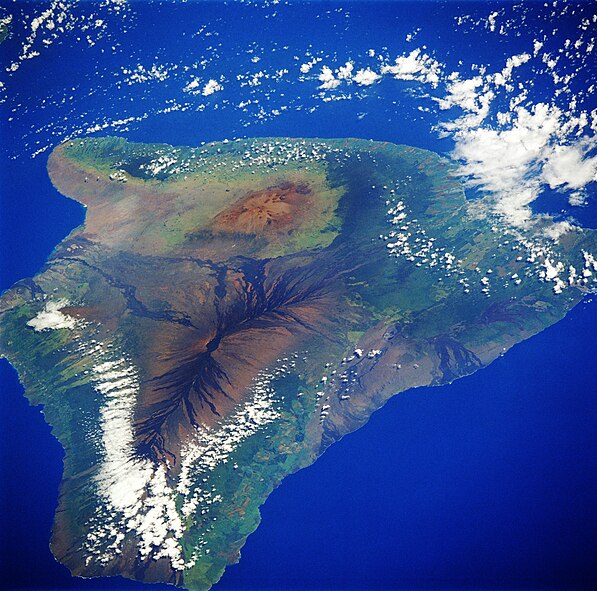 For the first time I did not spend Christmas in a wintery location with family. Instead, Christmas passed while Merijn and I honeymooned on Hawaii, on the Big Island. Hawaii is a dream destination, one that had spoken to my imagination ever since I saw a film about Hawaii in the Omniversum theater in The Hague with my brother and father. That must have been in the late nineteen-eighties. In my memory it was about the jungle and full of loud sound effects, prompting my brother and me to rename it "Lawaai," which is dutch for loud noise. And now I've been there, in the middle of the Pacific. Here's a list of things that made Hawaii special, in no particular order:
- Disembarking the airplane and feeling like you've entered a greenhouse.
- Wondering if the loud, crisp bird calls are real or come from loudspeakers.
- Waking up in a pool of stormwater in the first night out camping, deciding that you don't like the tropics.
- Eating tropical fruits for breakfast on a coffee farm with a view of the ocean, deciding that you love the tropics.
- Having the rainiest place and most sunny coast in the US about 50 miles apart.
- Drinking from a coconut picked from the tree under which you spent the night, while watching the sun rise over the clear blue pacific.
- Sunbathing on the beach in swim wear while watching snow-covered volcano peaks.
- Almost stepping on a chameleon that slowly and clumsily tries to cross the street.
- Picking cannonball-size avocados from a tree.
- Learning about the threat and management of invasive species. For example: feral pigs eat the starchy core of native tree ferns, creating places for rain water to stand in which mosquito larvae can thrive. Mosquitoes feed on honeycreepers (native birds) and infect them with malaria and pox, decimating the population (see here).
- Being told that vegetarians are free to eat pork on Hawaii; they would do nature a service.
- Seeing mongoose all over the island. They were introduced as a countermeasure to the rats in the sugar cane fields. But the twain never met, as rats are nocturnal and mongoose are not. Besides, the latter feeds on anything but rats.
- Witnessing an Hawaiian owl catch a prey on the ranch lands.
- Watching one splendid sunset after the other.
- Camping on the beach with the campsite's 'permanent residents' and being told that most of the campers around us are 'longstay.'
- Enjoying a cocktail in a picture postcard coconut grove to celebrate our ten years together.
- While enjoying that cocktail, watching the same couple we advised not to take that same rainy, stormy, extremely muddy hike we did that afternoon scrub the mud off their shoes in the surf.
- Waking up to the most beautiful concert of unfamiliar bird sounds.
- Learning how coffee, papaya, coconuts, mango, guava, lemon, jaboticaba, macadamia nuts, pomelo, avocados, breadfruit, lychees, starfruit, dragon fruit, pineapple, passion fruit, bananas and taro actually grow (most of which if not all are non-native to Hawaii, by the way).
- Drinking 100% Kona coffee.
- Putting your mask under water and discovering you're actually standing in the middle of an aquarium and are surrounded by hundreds of colored fish.
- Being warned to race uphill when you experience an earthquake, because you're camping in a 'tsunami evacuation zone.'
- Experiencing that a Chevy Aveo is not that bad a car after all.
- Concluding that the rainbow on the Hawaii license plate is very much justified.
- Learning about Hawaiian warrior ways without having to fear them.
- Feeling that on Hawaii, too, relationships between new and native culture is not without problems.
- Walking on a green sand beach, colored by olivine.
- Watching mighty waves pound the rocky coast and being amazed by the Polynesians who traveled thousands of miles across that water in small double-hulled canoes to arrive here.
- Walking across miles of black lava fields.
- Walking across miles of black lava fields to see fresh, glowing lava flow from the mountain into the sea, creating and lighting up plumes of steam.
- Feeling the heat of the lava.
- Having your butane camping stove, on which you're preparing your morning coffee, admired by local young men who gather at the same picknick table to smoke water pipe and share homemade cupcakes.
- Discovering that the river is too deep to ford and accepting that the hidden valley needs to stay hidden for you, at least until your next visit.
- Driving the roads on which the monstrous Hawaii Ironman triathlon is held every year in October (not flat, windy, hot).
- Visiting a Kohala coast resort and not having to stay there.
- Finding that mainland giants like Target, Macy's, Walmart, Sears are just as big on Hawaii and their huge parking lots just as full.
- Discovering a 9-inch centipede exploring your shoes in the middle of the night.
- Being knocked off your feet by a coastal storm while hiking with a heavy backpack.
- Not having to lock the door to your house.
- Breathing the cleanest air on the planet.
- Singing along with tutu and brother Lindsey doing the "Twelve Days of Christmas" Hawaiian style.
- Meeting people who found their paradise in Hawaii (and now run a B&B and grow fruits and coffee).
- Enjoying warm hospitality.
- Hearing German everywhere you go.
- Paying USD 4.33 a gallon for gas (compared to 3.25 on the main land, but still half of what Europeans pay).
- Learning about Hawaii's experiments with Ocean Thermal Exchange Conversion (OTEC) to generate power form the difference between cold deep-ocean water and warm surface water. Yet to be scaled up as a power plant, but the cold water pipe already serves a cascade of aqua- and horticulture businesses, such as sea horse, abalone, mushroom and strawberry production.
- Failing to spot spinner dolphins.
- Hanging loose. (Well, we tried.)
Monday, November 14, 2011
RFF launches shale gas risks and regulations study
This morning, Resources for the Future (RFF) launched a new initiative on risks and regulation of shale gas with a seminar at its offices. With $1.2 million dollar from the Alfred P. Sloan Foundation, RFF is going to survey experts and the general public, identify risks, risk drivers and risk perception and assess current state and federal legislation. After 18 months, recommendations for regulations and voluntary actions by firms to reduce risks cost-effectively should come out. According to RFF, this is the first independent, comprehensive initiative. An important value added RFF is after is to conduct surveys that involve trade-offs of risks and benefits. Given RFF's reputation and the design presented, I think the study is going to answer many questions. What worries me, though, is that mitigation of risks and enjoyment of benefits, esp. the climate benefits, of shale gas production are contingent on policies that are not yet in place. In theory natural gas from shale can reduce emissions by displacing coal to generate electricity and allow higher shares of solar and wind to be integrated into the system. That's why natural gas is often called a "bridge fuel" to a low-carbon energy system. However, according to other RFF studies, without new policies to price carbon, abundant shale gas is more likely to increase CO2 emissions and keep prices lower, making it harder for renewable energy sources to compete. So, while we're studying the risks and design regulations for safe extraction, shale gas production is ramping up quickly. How much (climate) damage will have been done and how much interest will have been vested by the time we have figured out how to get it right? Some States that have taken precautionary measures, like Maryland and New York, seem to realize that risk and take more time. The gas in their soils won't go anywhere.
Wednesday, October 26, 2011
Meeting the Prez
Little speech delivered as Host Opener at Capital Toastmasters 1 meeting on October 25, 2011:
On October 16th, the new Martin Luther King Jr. memorial was officially dedicated after hurricane Irene had postponed the ceremonies that were originally schedule for late August. My wife and I felt we should go. So we did. We had three reasons to go. First of all, we felt compelled to honor Dr. King’s life, legacy and unfinished dream. Although there were quite a few, we had hoped more white people had come out showing recognition that Dr. King’s work had lifted a moral burden off their shoulders and what he stood for is an inspiration to black and white alike. Second, it was a lovely fall morning to go out and experience American culture and the art of rhetoric by passionate speakers like reverend Al Sharpton. And third, it would be our chance to finally see the President, live.
 I remember the wave of hope that traveled through Europe when Obama was elected president in 2008 and I thought it would make for a nice goal to spot the president in person before we leave Washington. I’ve had several opportunities before, but each time, when I thought I came close, something came between me and Barack. One time I was strategically positioned at a health care summit in the Blair house. Little could go wrong, but when the president was about to walk out, everyone was directed backward two hundred yards and some fat, black SUVs came to block my view. Recently, the president was coming to the University of Maryland in College Park, where I work, for a town hall meeting. We could get free tickets, but when we showed up at the time they were going to be distributed, a line had formed across what seemed the entire campus. We queued for over an hour in 100+ degrees, but when we neared the box office the message came that tickets had run out.
This time, at the tidal basin, it could not go wrong. From our position we could see the main stage as well as the route over which the motorcade would arrive. The motorcade came. On a big screens we saw Obama and his family tour the memorial and were waiting for the president to take the stage. He did take the stage, but it was a different one, not the one we could see! We could only see him on the big screen. People all around us, who had been screaming for “four more years,” were disappointed too. They apparently had cherished the same hope. I’m beginning to suspect that the president is playing hide and seek with me.
Nevertheless, it was the closest I’ve come to see Obama and we were glad we had come to the dedication event and see so many inspired and grateful people. I encourage you all to go take a look. Barack and I, we’ll get our moment.
Tuesday, October 04, 2011
"Atomausstieg" and green energy consensus
"How refreshing!" The senior fellow at the Center for American Progress (CAP) sounded genuinely relieved when the delegation of politicians from the German state of Baden Württemberg explained that in Germany there was no debate whether the country should switch to 100% renewable energy sources - that notion is "mainstream" in Germany - but the discussion is how fast that transition should happen.
CAP hosted a roundtable discussion today with Baden Württemberg's environment and energy minister Franz Untersteller on German energy policy and what the U.S. could learn from that. The Germans were obviously proud of their bold, progressive stance on energy and climate while maintaining one of the strongest economies. "In Baden Württemberg unemployment is 3.9 percent, compared to around 9, 10 percent in the States," Untersteller said at least three times. He explained how about a decade ago, Germany had had a large, national debate on the future of the country's energy supply and the role of nuclear energy. At that time the Greens were in power and the conclusion had been that a decarbonization of the economy was inevitable and that nuclear power was not a part of that. "Atomausstieg" (phase-out of nukes) became national policy. A more conservative government later tried to slow the pace, but then Fukushima came. After the horrible tragedy in Japan, Germany decided that by 2022 all nuclear power plants had to be taken off the grid. For Baden Württemberg, which relies on nukes for 50% of its electricity consumption, that means a fundamental overhaul of its energy system. The eight oldest of the seventeen nuclear plants were shut down this year. Despite a lot of skepticism and fear that it would raise energy prices, not much had happened. Prices had hardly been influenced, no blackouts either. Would the "Atomausstieg" force Germany to abandon its renewable energy policy? Not at all. "We are convinced that climate change is a serious issue we should do something about," a parliamentarian said, causing the Americans to embarrassedly chuckle. The minister referred to a McKinsey report that said that 80% greenhouse gas emissions reduction was perfectly possible in combination with the "Atomausstieg." That made me think back to last week's faculty meeting at the University of Maryland School of Public Policy, when one professor proclaimed that "it is clear" that we can't get to 80% less CO2 emissions without "a dramatic increase" of nuclear power. "But, we can't do it with the current reactor technology." To me, the latter statement seemed to undermine the first, but contrast with the German notion is stark. This was the director of Center for International and Security Studies at Maryland (CISSM) speaking. For such a center the prospect of world without nuclear power, with all its complex security and international policy dimensions, is probably one worth doubting.
Apart from the climate issue, the Germans see huge opportunities in the energy efficiency and renewable energy business. Thanks to the widely copied German feed-in tariff system for renewable power generation, its renewable energy sector now boasts over 300,000 jobs and many companies that are leading in the world. "What about the lobby from vested fossil fuel interests?" someone asked. "We don't have such a thing as the Koch brothers," Untersteller said. Germany doesn't produce its own coal and few people would rather spend their euros on foreign oil and coal than on domestic solutions. Electricity consumers pay a 3.7 eurocents per kWh surcharge to pay for Germany's renewable energy policy, but approval rates of solar power are very high. Germany is turning a comparative disadvantage in the old-energy world (little domestic fossil fuel reserves) into a competitive edge in the new-energy world. As one American participant remarked, the abundance of cheap energy in the U.S. makes renewable energy far less competitive here. Nevertheless, the energy policy goals that drive the discussion in Germany are different from those in the U.S.. While for the Americans price, short term job creation and security of supply are most important, the Germans seem to put concerns over climate and new economic opportunities first. Whether this order of things reflects both countries' values and culture or is merely a consequence of different structural and geographic starting points, I don't know, but the German progressive consensus is surely refreshing and hopeful.
CAP hosted a roundtable discussion today with Baden Württemberg's environment and energy minister Franz Untersteller on German energy policy and what the U.S. could learn from that. The Germans were obviously proud of their bold, progressive stance on energy and climate while maintaining one of the strongest economies. "In Baden Württemberg unemployment is 3.9 percent, compared to around 9, 10 percent in the States," Untersteller said at least three times. He explained how about a decade ago, Germany had had a large, national debate on the future of the country's energy supply and the role of nuclear energy. At that time the Greens were in power and the conclusion had been that a decarbonization of the economy was inevitable and that nuclear power was not a part of that. "Atomausstieg" (phase-out of nukes) became national policy. A more conservative government later tried to slow the pace, but then Fukushima came. After the horrible tragedy in Japan, Germany decided that by 2022 all nuclear power plants had to be taken off the grid. For Baden Württemberg, which relies on nukes for 50% of its electricity consumption, that means a fundamental overhaul of its energy system. The eight oldest of the seventeen nuclear plants were shut down this year. Despite a lot of skepticism and fear that it would raise energy prices, not much had happened. Prices had hardly been influenced, no blackouts either. Would the "Atomausstieg" force Germany to abandon its renewable energy policy? Not at all. "We are convinced that climate change is a serious issue we should do something about," a parliamentarian said, causing the Americans to embarrassedly chuckle. The minister referred to a McKinsey report that said that 80% greenhouse gas emissions reduction was perfectly possible in combination with the "Atomausstieg." That made me think back to last week's faculty meeting at the University of Maryland School of Public Policy, when one professor proclaimed that "it is clear" that we can't get to 80% less CO2 emissions without "a dramatic increase" of nuclear power. "But, we can't do it with the current reactor technology." To me, the latter statement seemed to undermine the first, but contrast with the German notion is stark. This was the director of Center for International and Security Studies at Maryland (CISSM) speaking. For such a center the prospect of world without nuclear power, with all its complex security and international policy dimensions, is probably one worth doubting.
Apart from the climate issue, the Germans see huge opportunities in the energy efficiency and renewable energy business. Thanks to the widely copied German feed-in tariff system for renewable power generation, its renewable energy sector now boasts over 300,000 jobs and many companies that are leading in the world. "What about the lobby from vested fossil fuel interests?" someone asked. "We don't have such a thing as the Koch brothers," Untersteller said. Germany doesn't produce its own coal and few people would rather spend their euros on foreign oil and coal than on domestic solutions. Electricity consumers pay a 3.7 eurocents per kWh surcharge to pay for Germany's renewable energy policy, but approval rates of solar power are very high. Germany is turning a comparative disadvantage in the old-energy world (little domestic fossil fuel reserves) into a competitive edge in the new-energy world. As one American participant remarked, the abundance of cheap energy in the U.S. makes renewable energy far less competitive here. Nevertheless, the energy policy goals that drive the discussion in Germany are different from those in the U.S.. While for the Americans price, short term job creation and security of supply are most important, the Germans seem to put concerns over climate and new economic opportunities first. Whether this order of things reflects both countries' values and culture or is merely a consequence of different structural and geographic starting points, I don't know, but the German progressive consensus is surely refreshing and hopeful.
Monday, August 01, 2011
Twee voor twaalf...
Het ligt genuanceerd, het is complex en er moet geïntegreerd naar gekeken worden. Een kind kan de was niet doen; vele kinderen moeten samen de was doen (maar wij zijn geen kinderen). Er is visie nodig en er moeten radicale keuzes worden gemaakt. Anders raken we achterop. Bij China. Het gaat niet goed, we verliezen de slag. Deze regering doet er te weinig aan. Ze past slechts op de winkel, maar pakt de grote problemen waar dit land, deze wereld voor staat niet aan. We schuiven de rekening door naar volgende generaties. Het 'window of opportunity' sluit zich snel. De gevolgen zullen iedereen raken, de hardwerkende Amerikaan, de hardwerkende Nederlander, ook de zachtwerkenden ontspringen de dans niet, maar dat is dan hun eigen schuld. Met de zachtwerkenden zijn wij niet solidair. Wel met de zwakkeren. Ook zij worden geraakt. En de jeugd van tegenwoordig? Zij deugt niet, is lui en onverschillig. Zij is onze toekomst. De jeugd moet ook hard werken, geïntegreerd, voor onze bestwil. Het is twee voor twaalf.
Subscribe to:
Posts (Atom)