Stem 3 maart GroenLinks in Den Haag from GroenLinks Den Haag on Vimeo.
Zie ook de GroenLinks Den Haag Stadsgids. Blits en belangrijk.
Thursday, February 04, 2010

Monday, February 01, 2010
Washington Auto Show

At the Auto Show in several other places one could find confirmation that the environment is an important theme, but not yet a real buyers' concern. Compared to the American models, the big European ones, like the larger Volvos, looked small. Going small was clearly a road less taken by the producer than hybridization, as most brands now showed at least one or two hybrids, but quite often as a fuel saver in a big SUV or truck. Of the hybrids, Toyota's Prius is still the most fuel efficient, according to the fuel economy labels, which were present on every vehicle on display. An average sized Dutchman like me (6 foot 1.2 inch) still has to bend his neck sitting in the backseat. My impression after scanning fuel economy labels randomly is that very few automakers are ready for the coming 35 mpg fuel economy requirement.
Plug-in hybrids were only on display as concept or demonstration models. Chevrolet showed its Volt, which should enter selected markets later this year. According the long-legged girl presenting the model, it can do 40 miles in full-electric mode, allegedly enough for 76% of American daily commuter trips. A range-extender on board can kick in and generate electricity from regular gasoline to make the car go for another 200 miles. The Volt looked quite nice to me, but not as hot as its big brother on the other side fo the aisle: the Cadillac Converj concept car. There was very aerodynamically shaped electric sports model with (just like the Volt) a range extender. What's more, natural materials were used for the interior, like mulched and compressed bamboo and organic LED displays. Very very nice, but, unfortunately, whether this concept car will ever make it to the showrooms remains a question. As the lady presenter told the audience, most questions are about its color.
Thursday, January 28, 2010
Barefoot running
I've become increasingly intrigued by barefoot and forefoot running as it just makes much sense to me as a more natural, efficient and elegant technique. And now here's a piece of quantitative evidence: runners out there, you've got to watch this video.
I'm actually quite surprised that this isn't a long resolved issue. I guess it has something to do with asphalt being the major surface most people are running on (try running barefoot on pavement for the first time and it won't be long before the blood comes out) and, that's my little theory, the calf-strength required which starters may not develop before running into their first injuries. Besides, there's the interests of the incumbent sportswear industry. In the same time a new industry around barefoot running is developing quickly; see e.g. the prducers ecco biom, vibram, nike free and feelmax, and a range of methods like pose and chi, and instructions for those.
In the video, look how the calves are shaking at heel strike, while staying firm at forefoot strike. As I said, barefoot running makes sense to me. I think it was due to some injury that out of fear for overloading I have become a forefoot runner. And increasingly I am bothered by the large heel cushion in the sole of my trainers. It's in the way all the time. And every time I do hit the ground heel first the impact shocks me. On the other hand, I suspect that forefoot running caused a metatarsal stress fracture in my right foot last year, as it might stress those little bones more on bending. Nevertheless, I find this quite convincing; now here's some serious evidence supporting personal observations and bringing the moment I take off my running shoes closer.

Swollen right foot due to metatarsal stress fracture. June 2009
Tuesday, January 26, 2010
Admissibility Review Area

When I arrived at Dulles Airport on New Year’s day – Merijn and I had been back in The Netherlands for Merijn's thesis defense and for Christmas with our families - I felt that the worst was over. No bomb had exploded during the descent into Washington and we’d be home soon. It was just a matter of checking through immigration and reclaiming our luggage and we’d be out of here.
Right. So I handed the friendly officer at Immigration my I-94 form and my passport. I was already smiling in his camera and putting my finger on the little glass pad to have my photo and fingerprints taken and waited for the stamps. I knew the drill. He scanned my passport. “You’ve been to the US three times last year?” he asked. “When? For how long?”
He was right. Last June, Merijn went to College Park for a post-doc at the University of Maryland and I was working to follow shortly after. I had come in August for a week on a reconnaissance mission. In September I quit my job in the Netherlands and went to the US for as long as was allowed to look for a job in the DC metro area, including a ticket to stay longer. Whether to blame the economic crisis or my presentation skills, I don’t know, but my job hunt had not been unsuccessful yet and so, here I was again at the immigration officer’s booth.
“Welcome to the United States”, said the man. “No stamps?” I asked. “No stamps.” A bit confused we picked up our luggage and with our forms reaching out we approached customs. “You’ve got a B,” said the lady, “B is that way.” Merijn had no B, she could move on. OK, B it is, whatever, so I was off, through the door leading into a room…where no one was moving. I was like a drop of water in a river that ends up in small side stream flowing into a pool where the water is moving too slowly to see. Suitcases on carts messily lined up. Empty eyes, hanging cheeks. I got nervous, this was trouble.
Above the counter with the B there was a sign that read “Admissibility review area.” Review? Hadn’t the guy just said to me “welcome to the US?" Behind the counter were officers in blue uniforms doing……..doing what? In the three hours that followed, I couldn’t figure it out.
Waiting with me, there were many Arabic looking people, some with children. How long had théy been waiting here, after 20+ hour journeys from the Middle East possibly? Judging from the skewed demographic mix in the room, obviously these people had to answer tough questions and have their luggage searched much more often than me. I was the lucky one, but nevertheless, I felt feelings of anger and fatigue emerge. I cared less and less for actually getting in. Apparently it works, this kind of psychological war.
When the room was almost empty, I was finally called forth by an officer who seemed to take more interest in his colleagues’ whereabouts on New Year’s Eve than in getting me out of here. He searched my wallet, my bags, fished out with two fingers the latest Al Gore book. “Are you an environmental guy?” he asked. I wasn’t sure if that would be a good or a bad thing now, but I could only say “yes.” Amusedly he browsed my notebook. It was humiliating. Thank you, God, that I grew up in a free country. “Ok," he said, "I’m going to let you in. You’ve been honest to me. Believe me, most people are not, it drives me nuts. But you can’t keep on doing this: go out for a short time and then come back for a long time. You’ve got to think, man.” Right! That’s exactly what I’ve been doing: trying to find a solution! I would not want to do anything illegal. It just hadn’t worked out yet.
Finally, I got the stamps. Grabbed my things and walked out, past the sign that I had been looking at for the past four hours and that said: “Welcome to the United States.” Through the doors into the terminal to finally reunite with Merijn, who had been sitting there for six hours without knowing what was going on.
In the bus into town I felt small, closed. Rationally it had been a fair process, understandable. To the officer I was no other than an economic refugee, a fortune seeker. Probably I wás welcome, but I had trouble feeling so. It took me more than a day to get over it. I now blame it on the jet lag and thank the officer for setting a clear time limit for my mission here. Let me now work on competent communication, elevator pitches, etc. and make this work.
Wednesday, January 20, 2010
The climate change building
Let me share this great cartoon summarizing the climate deal negotiations:

.jpg)
It's from http://www.diplomacy.edu/climate/
Got it forwarded from Alan AtKisson.
Monday, January 18, 2010
MLK jr. day
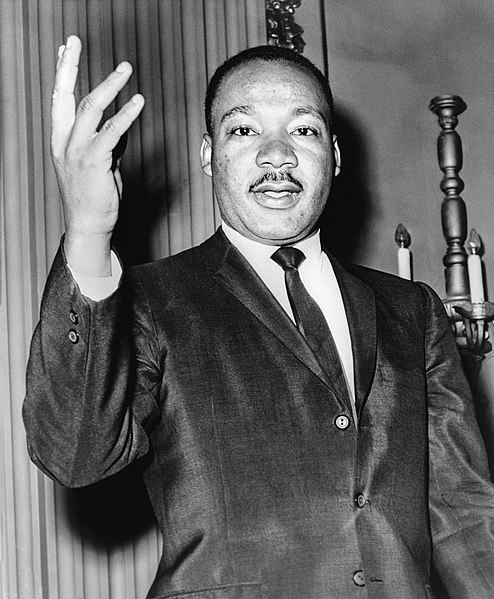
So this morning we cycled to JO Wilson Elementary School on K Street Northeast (home of the JO Wilson Cardinals) to help Ms. Wheeler, Ms. Smith and colleagues clearing their classrooms of broken or useless equipment, books, furniture etc. Ms. Wheeler told the 30 to 40 volunteers who had shown up with us that the school was preparing for a major renovation due in May this year. It was time to get rid of all the surplus material. In the process of throwing things out, we should not let ourselves be held back by sentimentality, she told us, as this was likely the reason that all this stuff was still there. The next three hours we were busy carrying all things down into the commons area and sorting them out. On the upper floors Ms. Fudge had positioned herself strategically to oversee the whole floor from an intersection of corridors, on ground level in the commons area, Ms. Smith held everything comfortably under control and gave directions where to put everything. If I asked what to do next, she always had a command ready, keeping all volunteers satisfied.
I cane across some interesting stuff. There was text book on "the American way of life", apparently something that doesn't come naturally and has to be taught. And above the class rooms the name of the room and of the teacher were shown in French, the proof of a passionate French teacher. Nothing wrong with it, but it puzzled me why elementary school kids in the US should be taught French? Apparently MLK had been a theme in class, too, because on the walls there were several creations featuring the historic icon.
Around noon Ms. Wheeler got nervous, as the 140 (!) volunteers she expected for the second shift - for moving a hall full of trash onto the parking lot for shipment or disposal - didn't show up. When we were taking a break in the conference room, loading up for the second wave to stand in for the missing army of volunteers, red-shirted consultants from Accenture were starting to drop in, saving the day for Ms. Wheeler. She'd be fine. We dismissed ourselves, said good bye to Ms. Fudge c.s. and agreed that we hadn't come in vain.
And now the commemoration part: one of the greatest speeches in history, delivered August 28, 1963, on the steps of the monument in which two more historical speeches, by Lincoln, are engraved, and which has become my favorite place in Washington, DC. It has done a lot of good, but today, 46 years later, 147 years after Lincoln's Emancipation Proclamation, still, everyday, on the streets of DC and in the confrontation with my own prejudices, there is inescapable evidence that the "Dream" dreamt more than 46 years ago has not fully come true yet.
Thursday, January 07, 2010
Meaning of Copenhagen? It depends....
A new world order is taking the stage; in Copenhagen the G8 has been replaced by the C5, is what Jonathan Lash, president of the World Resources Institute, told journalists this morning at the National Press Club, where he briefed the media on "Environmental Stories to Watch in 2010." Most of the talk and the questions focused on the meaning of the remarkable developments at the COP15 in Copenhagen. What happened was so unusual and the interpretations so diverse (ranging from "disaster" to "success"), that the only serious conclusion as to what it will mean is "don't know." A small group of heads-of-states, representing over half of the world's population, sitting together personally for multiple hours to forge an agreement, is unprecedented. A clear target (less than 2ºC mean global warming) in an international agreement is (apparently) unprecedented (although published emission reduction commitments fall far short). However, many things are still unclear, but Lash observed that a this initiative broke through "15 years of disfunction" of the United Nations Framework Convention on Climate Change, under which a global climate deal was supposed to be negotiated. This failed in Copenhagen.
And where was Europe? Is it out of the game? Was it a shame - as some have said - that it wasn't at the table when the C5 negotiated? (What's that C for? Copenhagen? Climate? No one asked or told.*) Well, no. Europe wasn't the problem after all, said Lash, it was the disagreement between the USA and the emerging economies that was the blockage. Europe had put clear and ambitious goals at the table long before Copenhagen. If it manages to create a strong presidency, with a mandate to represent the European Union, it will be back at the table.
*The C is for Copenhagen, Jonathan Lash mentions in this Guardian article.
Find complete coverage (incl. video, slides, transcript) on WRI's website here.
Read the Treehugger account of the event here.
And where was Europe? Is it out of the game? Was it a shame - as some have said - that it wasn't at the table when the C5 negotiated? (What's that C for? Copenhagen? Climate? No one asked or told.*) Well, no. Europe wasn't the problem after all, said Lash, it was the disagreement between the USA and the emerging economies that was the blockage. Europe had put clear and ambitious goals at the table long before Copenhagen. If it manages to create a strong presidency, with a mandate to represent the European Union, it will be back at the table.
*The C is for Copenhagen, Jonathan Lash mentions in this Guardian article.
Find complete coverage (incl. video, slides, transcript) on WRI's website here.
Read the Treehugger account of the event here.
Subscribe to:
Posts (Atom)